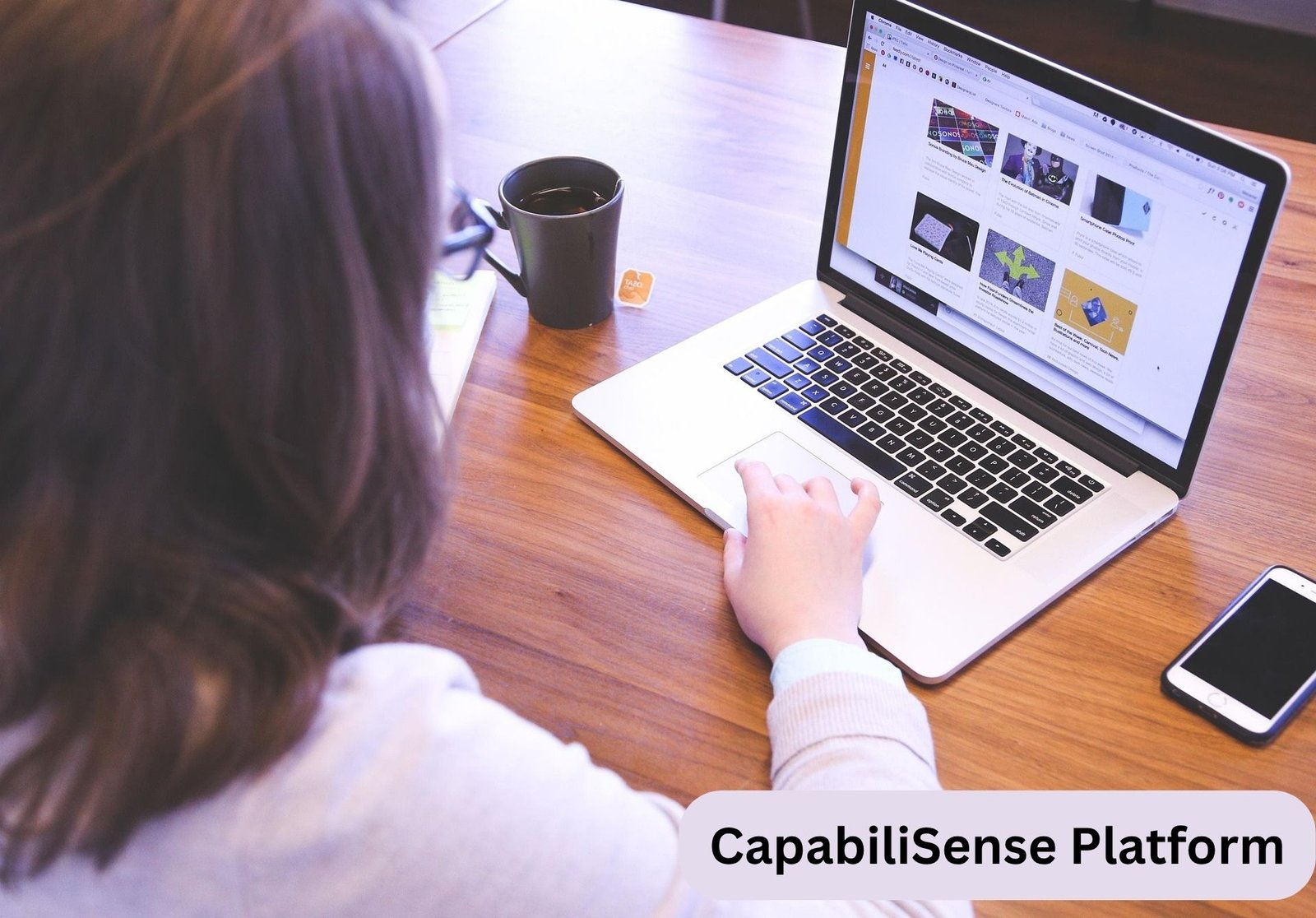
CapabiliSense Platform: The Complete Guide to AI-Powered Capability Intelligence By CapabiliSense Platform
Organizations today invest millions in digital transformation, cloud migration, artificial intelligence, and workforce development initiatives. Yet many of these projects fail because leaders lack a clear understanding of their actual organizational capabilities.
This is where the CapabiliSense Platform enters the conversation.
Rather than relying on surveys, interviews, or subjective assessments, the CapabiliSense Platform uses artificial intelligence and evidence-based analysis to identify capability gaps, organizational strengths, maturity levels, and transformation readiness. It helps businesses move from assumptions to data-backed decisions.
Table of Contents
In this comprehensive guide, you’ll learn what the CapabiliSense Platform is, how it works, its key features, benefits, challenges, use cases, implementation process, and why capability intelligence is becoming a critical competitive advantage.
What Is the CapabiliSense Platform?
The CapabiliSense Platform is an AI-powered capability intelligence and assessment platform designed to analyze organizational data, business documents, workflows, operational evidence, and transformation initiatives to identify actual capabilities and performance gaps.
Unlike traditional assessment systems that depend on manual questionnaires and subjective scoring, CapabiliSense focuses on evidence-based analysis.
The platform helps organizations answer questions such as:
- What capabilities currently exist?
- Which capabilities are missing?
- Where are transformation risks hiding?
- Which initiatives are likely to succeed?
- What organizational strengths can be leveraged?
- How mature are existing processes?
The result is a clearer understanding of organizational readiness and strategic execution capability.
Why Capability Intelligence Matters
Many organizations struggle with:
- Digital transformation failures
- Technology adoption issues
- Skill shortages
- Process inefficiencies
- Strategic misalignment
- Poor decision-making
Traditional consulting methods often rely on workshops, interviews, and assumptions.
Capability intelligence changes this approach by using actual organizational evidence.
Key Benefits of Capability Intelligence
- Objective assessments
- Reduced bias
- Faster decision-making
- Better transformation outcomes
- Improved resource allocation
- Increased operational visibility
- Enhanced strategic planning
Organizations that understand their true capabilities make better business decisions.
How the CapabiliSense Platform Works
1. Data Collection
The platform gathers information from various sources, including:
- Business documents
- Strategic plans
- Operating models
- Policy documents
- Project reports
- Performance metrics
- Process documentation
- Learning records
2. AI-Powered Analysis
Advanced AI technologies analyze collected information using:
- Natural Language Processing (NLP)
- Machine Learning
- Pattern Recognition
- Semantic Analysis
- Capability Mapping
3. Capability Assessment
The system evaluates:
- Current maturity levels
- Existing strengths
- Missing capabilities
- Strategic alignment
- Operational readiness
4. Gap Identification
The platform identifies:
- Skill gaps
- Process gaps
- Technology gaps
- Governance gaps
- Leadership capability gaps
5. Actionable Recommendations
Decision-makers receive practical recommendations for:
- Capability development
- Resource planning
- Transformation initiatives
- Workforce development
- Risk mitigation
Core Features of the CapabiliSense Platform
AI-Driven Capability Mapping
One of the platform’s strongest features is automated capability mapping.
Instead of manually documenting organizational capabilities, AI identifies them from existing evidence.
Benefits include:
- Faster analysis
- Higher accuracy
- Reduced manual effort
- Better scalability
Evidence-Based Assessment
Traditional assessments often depend on opinions.
CapabiliSense evaluates real evidence, including:
- Documentation
- Deliverables
- Project outcomes
- Operational records
This creates more reliable results.
Capability Maturity Analysis
Organizations can assess maturity across multiple dimensions:
| Maturity Level | Description |
|---|---|
| Initial | Ad hoc processes |
| Developing | Basic structure exists |
| Defined | Standardized processes |
| Managed | Measured and monitored |
| Optimized | Continuously improved |
Gap Detection
The platform identifies:
- Missing capabilities
- Weak processes
- Unsupported initiatives
- Strategic inconsistencies
This allows organizations to address issues before they become costly problems.
Risk Assessment
CapabiliSense highlights:
- Transformation risks
- Capability risks
- Resource risks
- Operational risks
Early identification improves project success rates.
Dashboard and Reporting
Executives gain access to:
- Capability heatmaps
- Maturity dashboards
- Gap analysis reports
- Risk visualizations
- Strategic alignment reports
Major Benefits of Using CapabiliSense
Improved Strategic Alignment
Organizations often struggle to align strategy with execution.
CapabiliSense helps ensure that capabilities support business objectives.
Faster Transformation Programs
By identifying readiness levels early, organizations can avoid delays and costly mistakes.
Better Workforce Planning
Leaders gain insight into:
- Current skills
- Future requirements
- Talent shortages
- Development priorities
Enhanced Decision-Making
Evidence-based insights lead to better strategic decisions.
Increased Operational Efficiency
Organizations can eliminate redundant activities and focus on high-value initiatives.
Real-World Use Cases
Digital Transformation
Organizations use CapabiliSense to evaluate readiness before launching transformation programs.
Cloud Migration
The platform identifies:
- Technical capabilities
- Governance readiness
- Skill gaps
- Security requirements
Enterprise Architecture
CapabiliSense supports:
- Architecture assessments
- Technology planning
- Capability alignment
Organizational Development
HR and leadership teams use it for:
- Workforce planning
- Leadership development
- Skills management
Consulting Services
Consultants use capability intelligence to provide evidence-based recommendations.
Industries That Can Benefit
Financial Services
- Risk management
- Regulatory compliance
- Operational efficiency
Healthcare
- Process optimization
- Workforce capability assessment
- Digital transformation readiness
Manufacturing
- Operational excellence
- Technology modernization
- Workforce development
Government
- Public sector transformation
- Policy implementation
- Capability planning
Technology Companies
- Product development
- Innovation management
- Scaling operations
Common Challenges and Solutions
Challenge 1: Data Quality
Poor data can affect analysis quality.
Solution: Establish governance standards before implementation.
Challenge 2: Resistance to Change
Employees may hesitate to adopt new assessment methods.
Solution: Communicate benefits and provide training.
Challenge 3: Integration Complexity
Connecting multiple systems can be difficult.
Solution: Use phased implementation strategies.
Challenge 4: Capability Definitions
Different teams may interpret capabilities differently.
Solution: Create standardized capability frameworks.
Best Practices for Successful Implementation
Start with Clear Objectives
Define what you want to achieve.
Involve Key Stakeholders
Include:
- Executives
- HR teams
- Operations leaders
- Technology teams
Establish Governance
Create ownership and accountability.
Monitor Progress
Use dashboards and KPIs regularly.
Continuously Improve
Capability intelligence should be an ongoing process.
CapabiliSense vs Traditional Capability Assessments
| Feature | Traditional Assessment | CapabiliSense |
|---|---|---|
| Manual Surveys | Yes | No |
| Evidence-Based | Limited | Yes |
| AI Analysis | No | Yes |
| Real-Time Insights | Limited | Yes |
| Scalability | Moderate | High |
| Bias Reduction | Low | High |
| Automation | Limited | Extensive |
Future of Capability Intelligence
The future will likely include:
Advanced AI Models
More accurate capability prediction.
Predictive Analytics
Forecasting future capability needs.
Real-Time Organizational Intelligence
Continuous monitoring instead of periodic assessments.
Autonomous Recommendations
AI-generated capability improvement plans.
Deeper Integration
Integration with:
- HR platforms
- ERP systems
- Learning platforms
- Project management tools
Frequently Asked Questions (FAQs)
What is the CapabiliSense Platform?
CapabiliSense is an AI-powered capability intelligence platform that evaluates organizational capabilities using evidence-based analysis.
How does CapabiliSense work?
It collects organizational information, analyzes it using AI, identifies capability gaps, and provides actionable insights.
Who can use CapabiliSense?
Businesses, government agencies, consultants, HR teams, and transformation leaders.
Is CapabiliSense suitable for small businesses?
Yes, especially organizations planning growth and digital transformation.
What problems does CapabiliSense solve?
It addresses capability gaps, strategic misalignment, transformation risks, and workforce planning challenges.
Does CapabiliSense use artificial intelligence?
Yes. AI powers analysis, capability mapping, pattern recognition, and reporting.
What industries benefit most?
Finance, healthcare, government, manufacturing, consulting, and technology sectors.
How is it different from traditional assessments?
It uses evidence and AI rather than relying mainly on surveys and interviews.
Can CapabiliSense support digital transformation?
Yes. Transformation readiness assessment is one of its strongest use cases.
What are the biggest benefits?
Better decision-making, improved strategic alignment, reduced risks, and increased operational visibility.
Conclusion
The CapabiliSense Platform represents a significant shift in how organizations understand and develop their capabilities. Instead of relying on subjective assessments and outdated frameworks, it leverages AI, evidence-based analysis, and capability intelligence to deliver a more accurate picture of organizational readiness.
As digital transformation accelerates and business environments become increasingly complex, capability intelligence platforms like CapabiliSense can help leaders make smarter decisions, identify risks earlier, and build stronger organizations.
For businesses seeking better visibility into their strengths, weaknesses, and future potential, CapabiliSense offers a modern and practical approach to capability assessment and strategic planning.