Spore Syringe Straight to Spawn: Risks, Benefits & Guide
Spore Syringe Straight to Spawn: Does It Work and Is It Worth the Risk?
Many beginners ask the same question: Can you use a spore syringe straight to spawn?
The short answer is yes. A spore syringe can be injected directly into sterilized grain spawn or all-in-one grow bags. In fact, many beginner kits are designed around this approach. However, direct inoculation also carries a higher risk of contamination and usually takes longer than working with agar or liquid culture.
Table of Contents
Understanding the advantages, limitations, and best practices of using a spore syringe straight to spawn can save time, reduce failures, and help growers make informed decisions.
This guide explains how the process works, when it makes sense, and why experienced cultivators often choose other methods.
What Is a Spore Syringe?
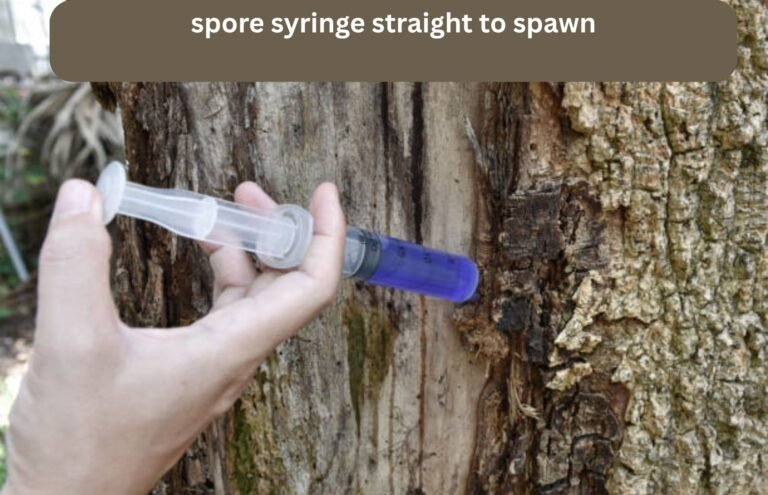
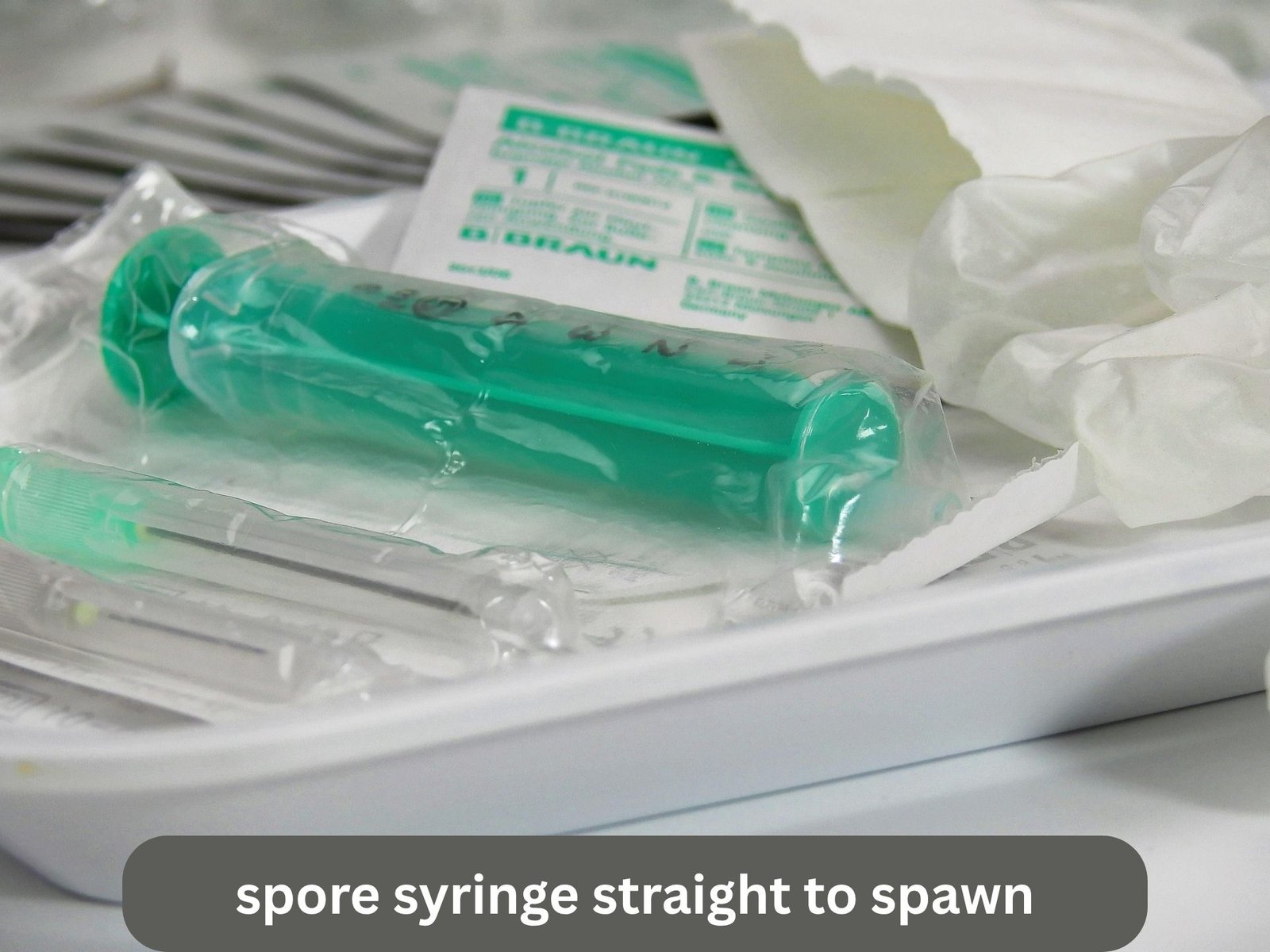
A spore syringe contains mushroom spores suspended in sterile water. The spores appear as dark specks or cloudy streaks inside the syringe.
Unlike liquid culture, a spore syringe contains spores rather than actively growing mycelium. Before colonization can begin, compatible spores must germinate and develop into mycelium.
Because of this extra step, spore syringes generally colonize more slowly than liquid cultures.
What Does “Straight to Spawn” Mean?
Straight to spawn means injecting a spore syringe directly into:
- Grain jars
- Grain bags
- All-in-one grow bags
- Sterilized spawn media
The spores germinate inside the grain itself rather than first being transferred to agar.
This method eliminates several laboratory steps and appeals to beginners because it requires fewer supplies.
Can You Put a Spore Syringe Straight Into Spawn?
Yes.
Many growers successfully inoculate grain bags and jars directly with spores.
The process involves:
- Sterilized grain.
- Injection port.
- Flame-sterilized needle.
- Small amount of spore solution.
- Warm incubation conditions.
Several cultivation guides describe direct inoculation as a workable beginner technique.
However, success depends heavily on:
- Sterility.
- Spore quality.
- Grain preparation.
- Environmental cleanliness.
Why Many Growers Avoid Spore Syringe Straight to Spawn
Experienced cultivators frequently recommend placing spores on agar first.
The reasons include:
1. Contamination Detection
Spores are not inherently sterile.
Bacteria or mold spores may be present in the syringe.
Agar allows contamination to become visible before valuable grain is inoculated.
2. Faster Future Growth
Once clean mycelium is isolated, it can be expanded into liquid culture or additional agar plates.
3. Better Genetics
Spores contain genetic variation.
Agar allows selection of vigorous growth.
4. Reduced Grain Loss
Contaminated grain often must be discarded entirely.
Agar reduces this risk.
Community discussions consistently identify agar as the preferred method for ensuring clean cultures.
Spore Syringe vs Liquid Culture
| Feature | Spore Syringe | Liquid Culture |
|---|---|---|
| Contains spores | Yes | No |
| Contains live mycelium | No | Yes |
| Colonization speed | Slow | Fast |
| Contamination detection | Difficult | Easier when tested |
| Genetic consistency | Variable | More consistent |
| Beginner friendly | Yes | Moderate |
| Cost | Lower | Higher |
Liquid culture often colonizes grain faster because living mycelium immediately begins expanding after inoculation.
Spore Syringe vs Agar
| Factor | Direct to Spawn | Agar First |
|---|---|---|
| Equipment needed | Minimal | Moderate |
| Contamination risk | Higher | Lower |
| Time to first transfer | Faster | Slower initially |
| Long-term success | Moderate | High |
| Culture selection | None | Possible |
| Reusability | Limited | Excellent |
Agar introduces an extra step but significantly improves control.
How Direct Inoculation Works
Step 1: Shake the Syringe
Spores settle over time.
Agitate the syringe thoroughly so spores distribute evenly.
Step 2: Sterilize the Needle
Flame sterilization reduces contamination.
Step 3: Inject the Grain
Insert the needle through the injection port.
Inject a small amount of solution.
Many guides recommend avoiding excessive liquid because excess moisture can create problems.
Step 4: Incubate
Store the grain at stable temperatures.
Mycelium growth may appear spore syringe straight to spawn within days or may take several weeks.
How Long Does It Take?
Typical timelines include:
- Germination: 5–14 days.
- Early colonization: 2–3 weeks.
- Full colonization: 3–6 weeks.
Several factors influence speed:
- Species.
- Temperature.
- Spore viability.
- Moisture levels.
- Grain type.
Liquid culture typically colonizes faster because active mycelium is already present.
Common Problems
Contamination
Green, black, pink, or unusual growth usually indicates contamination.
Excess Moisture
Too much solution can create bacterial conditions.
Slow Germination
Some syringes require additional time.
Uneven Colonization
Spores germinate at different points.
Genetic Variability
Each spore pairing produces unique genetics.
Signs of Healthy Growth
Healthy mycelium generally appears:
- White.
- Stringy or fluffy.
- Expanding steadily.
- Evenly distributed.
Yellow metabolites may occur and are not always a sign of contamination. Some extension resources note that colored molds such as green or black are more concerning.
Best Practices for Success
Use Sterile Grain
Improper sterilization causes many failures.
Inject Small Amounts
Less liquid reduces excess moisture.
Maintain Stable Temperatures
Large temperature swings slow growth.
Avoid Frequent Handling
Constant inspection increases contamination opportunities.
Use Quality Genetics
Reliable spore sources improve outcomes.
Is Direct-to-Spawn Good for Beginners?
Yes.
Many beginners choose this method because:
- It requires fewer supplies.
- No agar plates are needed.
- Minimal laboratory experience is required.
- Starter kits often support this approach.
However, beginners should understand that contamination rates may be higher.
Who Should Use Agar Instead?
Agar is ideal for:
- Frequent growers.
- People seeking consistency.
- Those wanting cleaner cultures.
- Anyone producing liquid culture.
- Growers minimizing contamination risk.
Experienced cultivators often recommend using only a small amount of the spore syringe on agar and preserving the remaining solution for future use.
Common Mistakes
- Injecting too much solution.
- Using poorly sterilized grain.
- Opening containers unnecessarily.
- Incubating at unstable temperatures.
- Assuming all white growth is healthy.
- Discarding slow cultures too early.
Expert Tips
- Label inoculation dates.
- Store unused syringes properly.
- Use multiple inoculation points.
- Keep work areas clean.
- Learn basic agar techniques for future projects.
Frequently Asked Questions
1. Can you inject a spore syringe directly into grain?
Yes. Direct inoculation is widely used by beginners.
2. Is direct-to-spawn slower than liquid culture?
Yes. Spores must germinate before colonization begins.
3. Does a spore syringe contain mycelium?
No. It contains spores suspended in sterile water.
4. How much solution should be injected?
Small amounts generally work best to avoid excess moisture.
5. Why do experienced growers use agar?
Agar helps detect contamination and isolate strong cultures.
6. How long does colonization take?
Anywhere from two to six weeks depending on conditions.
7. Can contamination come from the syringe?
Yes. Spores themselves are not guaranteed to be sterile.
8. Should beginners learn agar?
Eventually, yes. Agar improves consistency and success rates.
9. Can one syringe inoculate multiple containers?
Yes. A single syringe often contains far more spores than needed.
10. Which method gives the fastest results?
Liquid culture generally colonizes fastest.
Conclusion
Using a spore syringe straight to spawn is possible, practical, and widely used by beginners. It offers simplicity and requires minimal equipment, making it attractive for first-time growers.
However, the tradeoff is increased contamination risk and slower colonization compared with agar or liquid culture.
For casual or first-time cultivation, direct inoculation can work well. For long-term success and improved reliability, learning agar techniques provides significant advantages.
Understanding the strengths and weaknesses of each method allows growers to choose the approach that best fits their experience level and goals.